Optimizing uPAR-targeting radiopeptides for improved tissue distribution: progress towards radionuclide therapy
2025.10.27.
Christian Vaccarin et al, EJNMMI, 2025
Summary
The aim of the study was to develop uPAR-targeting radiopeptides modified with an albumin-binding moiety to achieve improved tissue distribution. The novel peptides demonstrated significantly higher albumin-binding and similar uPAR affinity, while showing markedly increased tumor uptake in a mouse model compared to the reference compound. The biodistribution results were further confirmed by SPECT/CT imaging, which clearly visualized the enhanced tumor accumulation. Linker and chelator modifications had a substantial impact on pharmacokinetics and tissue distribution.
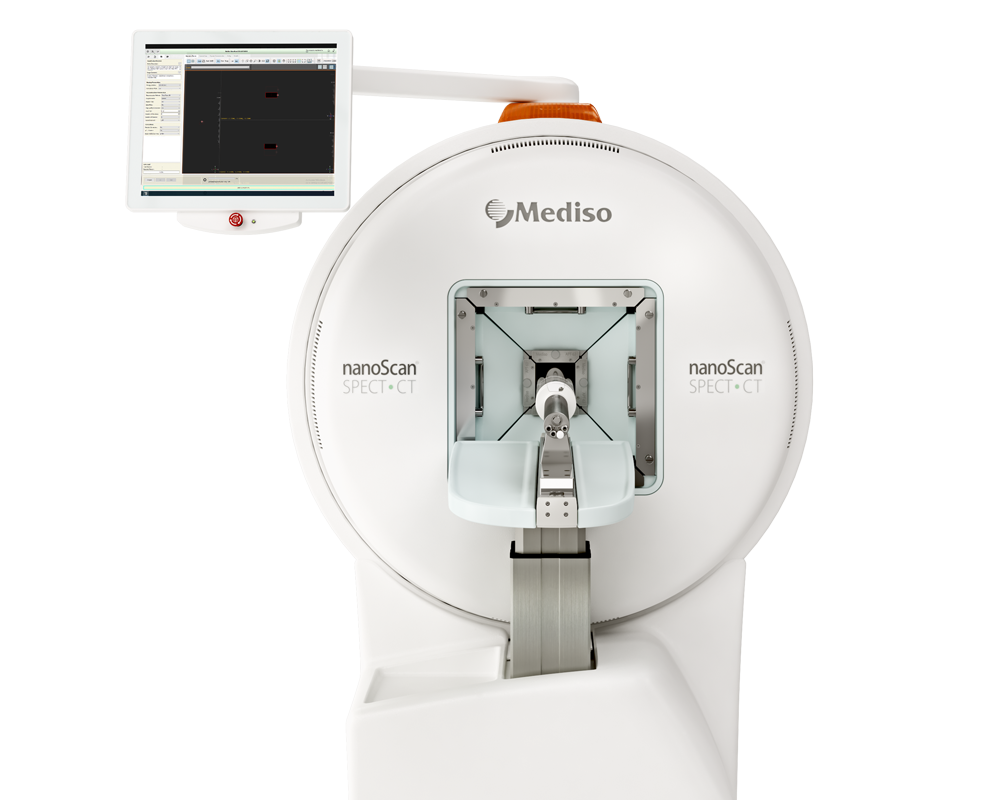
Results from nanoScan® SPECT/CT
SPECT/CT imaging was performed in HEK-uPAR xenografted nude mice using a small-animal nanoScan® SPECT/CT system (Mediso Medical Imaging Systems, Budapest, Hungary) at multiple time points after injection of the respective [177Lu]Lu-uPAR radiopeptide. A dose of 25 MBq (0.5 nmol) in 100 µL of 0.9% NaCl containing 0.05% bovine serum albumin was administered. The acquired images were used to assess temporal changes in tracer biodistribution and tumor uptake. Early time points showed notable blood pool and cardiac activity, which largely cleared over time, although prolonged circulation was observed for [177Lu]Lu-uPAR-12. Tumor uptake was clearly visualized, with [177Lu]Lu-uPAR-11, -15, and -18 demonstrating strong and sustained accumulation in the xenografts, while others showed faster washout at later time points. Renal accumulation was observed for most compounds shortly after injection, followed by progressive clearance, resulting in minimal kidney signal at later imaging stages. (Fig.4)

Figure 4. SPECT/CT images of HEK-uPAR xenografted mice at 1 h, 4 h, and 24 h post-injection of [177Lu]Lu-uPAR radiopeptides. Tumor uptake, blood pool activity, and renal clearance varied among the compounds, highlighting differences in biodistribution and retention over time.
Conclusion
SPECT/CT imaging confirmed that [177Lu]Lu-uPAR-11 exhibited strong and sustained tumor uptake with efficient clearance from non-target tissues, supporting its favorable biodistribution profile and reinforcing its selection as the most promising candidate for further preclinical evaluation.
Full article on link.springer.com
How can we help you?
Don't hesitate to contact us for technical information or to find out more about our products and services.
Get in touch