Novel dimeric dual-modality FAP-targeted agents with favorable tumor retention for image-guided surgery: a preclinical study
2025.11.19.
Giacomo Gariglio et al., EJNMMI, 2025
Summary
Purpose: Complete and minimally invasive cancer surgery remains challenging. Targeting the fibroblast activation protein (FAP) offers valuable opportunities for surgical planning, intraoperative guidance and improved resection outcomes. Herein, the first dimeric, dual-modality FAP-targeted imaging agents were developed and the influence of different near-infrared cyanine-7 dyes on their final properties were investigated.
Methods: Four dual-modality ligands based on the Fusarinine C scaffold were synthesized. Their FAP specificity and retention were evaluated in cellular and xenograft tumor models. The most promising candidates were labelled with 67/68Ga and assessed in vivo at early time points by PET/CT imaging and by comparative SPECT/CT and NIR fluorescence imaging (FI) up to two days post-injection.
Results: Distinct fluorophore influences on the properties of the final compounds were identified. The introduction of the s775z dye demonstrated a beneficial effect on the cellular uptake and on the in vivo biodistribution profile as revealed by the greatest improvement in blood clearance and the least off-target accumulation in liver and kidneys when compared to the control and to the other candidates respectively. Ex vivo experiments and in vivo PET/CT, SPECT/CT and FI studies in xenografted mice confirmed these findings and demonstrated sustained tumor uptake (> 7% ID/g and > 5% ID/g at 1 h and 1 day p.i. respectively) for 67Ga-s775z-FFAPi and 67Ga-IRDye-FFAPi.
Conclusions: In this study novel dimeric FAP-targeting agents were introduced and evaluated for dual-modality applications. In the preclinical setting, within the group of compounds investigated, two candidates enabled tumor visualization through PET, SPECT and optical imaging, providing satisfactory background contrast after a single administration and supporting their potential for preoperative nuclear imaging and subsequent fluorescence-guided surgery.
Results from nanoScan® PET/CT and nanoScan® SPECT/CT
For the ex vivo biodistribution study on healthy female BALB/c mice, 4 animals per group were injected with 0.10 nmol of Gallium-68 labelled tracer (0.5 MBq) and then sacrificed after 1 h. The animals were allocated to groups without randomization. The organs of interest were extracted, weighed, and measured in the γ-counter. Results were expressed as percentages of injected dose per gram tissue (% ID/g). For the induction of tumor xenografts, 2 × 10⁶ of HT1080hFAP or HT1080 cells in 100 μL appropriate medium were subcutaneously injected in the right and left flank of each mouse (athymic female BALB/c nude), respectively. The tumors were allowed to grow until they had reached a volume of 0.3 to 0.8 cm3. To achieve comparable baseline tumor sizes between groups, mice were divided into strata based on tumor size and assigned to groups to balance the distribution of tumor sizes. To evaluate ex vivo biodistribution on tumor models, 3 mouse xenografts were injected with 0.25 nmol of Gallium-67 labelled tracer (0.4 MBq) and then sacrificed after 1 h, 4 h and 1 day.
For the PET/CT imaging study one xenograft-bearing mouse (tumor volume in the range 0.6–1.0 cm3) was injected with 1.0 nmol of Gallium-68 labelled tracer (5–8 MBq). Static PET/CT images of the anesthetized animal in prone position were acquired with a Mediso nanoScan PET/CT small-animal imaging system (Mediso Medical Imaging Systems, Budapest, Hungary) at 1 h and 2 h p.i. Image reconstruction was performed via Mediso Tera-Tomo 3D PET iterative reconstruction (Mediso Medical Imaging Systems, Budapest, Hungary). The images were visualized, processed, and quantified in Mediso InterView FUSION (Mediso Medical Imaging Systems, Budapest, Hungary). The images were normalized to injected activity and animal weight. The results were expressed as percentages of injected dose per gram tissue (% ID/g).
For the comparative imaging study (SPECT and in vivo fluorescence imaging), one xenograft-bearing mouse (tumor volume in the range 0.2–0.7 cm3) was injected with 1.5–2 nmol of Gallium-67 tracer (15–17 MBq) and imaged at various time points up to 2 days p.i. Static SPECT/CT images of the anesthetized mouse in prone position were acquired on Mediso nanoScan SPECT/CT small-animal imaging system (Mediso Medical Imaging Systems, Budapest, Hungary). Image reconstruction was performed via Mediso Tera-Tomo 3D normal dynamic range (Mediso Medical Imaging Systems, Budapest, Hungary). The images were visualized, processed, and quantified in Mediso InterView FUSION (Mediso Medical Imaging Systems, Budapest, Hungary).
- Early PET/CT imaging confirmed biodistribution differences among tracers: imaging performed with 68Ga-labeled tracers showed that the four dual-modality tracer exhibited distinct uptake patterns matching biodistribution data. [68Ga]Ga-s775z-FFAPi demonstrated the most favorable imaging profile, with low off-target liver/kidney accumulation and good tumor visualization (see Fig. 7.).
- [68Ga]Ga-s775z-FFAPi provided image quality comparable to clinical [68Ga]Ga-FAPI-46.
- PET/CT also confirmed sustained tumor uptake: Imaging supported ex vivo biodistribution findings, demonstrating strong early tumor uptake that remained high up to later time points for the lead tracers.
- SPECT/CT visualized tumors up to 1 day post injection: Xenografted mice injected with 67Ga-s775z-FFAPi and 67Ga-IRDye-FFAPi showed clear tumor visualization up to 24 h p.i. (see Fig. 8.) Both tracers preserved their biodistribution profiles from early to late time points.
- It was found that by 2 days post injection, SPECT loses contrast but fluorescence persists.
- Imaging by SPECT/CT allowed to investigate sustained tumor retention: Observed tumor uptake levels at 1 h and 1 day mirrored ex vivo retention data; both s775z-FFAPi and IRDye-FFAPi maintained strong tumor accumulation with good tumor-to-ackground ratios.
Fig. 7. Static PET/CT MIP images of HT1080hFAP/HT1080 xenografted BALB/C nude mice injected with Gallium-68 labelled dual-modality agents and [68Ga]Ga-FAPI-46 as reference (amount injected: 1.0 nmol, 5.0–8.0 MBq). L = liver, K = kidney, T(+) = HT1080hFAP tumor, T(-) = HT1080 tumor. Below each image, the uptake in the HT1080hFAP tumor is expressed as the mean percentage of the injected dose per gram (%ID/g).
Fig. 8. Static SPECT/CT MIP images and corresponding near-infrared fluorescence images were acquired at various time points for HT1080hFAP/HT1080 xenografted BALB/C nude mice (one per compound) injected with [67Ga]Ga-s775z-FFAPi or with [67Ga]Ga-IRDye-FFAPi (1.5–1.8 nmol, 15–17 MBq).


Conclusions
In this preclinical study, dimeric dual-modality imaging agents targeting FAP were developed for the first time. In addition, systematic investigation of the impact of different heptamethine cyanine fluorophores was done regarding the in vitro and in vivo properties of these agents.
Notably, after a single administration, s775z-FFAPi and IRDye-FFAPi demonstrated rapid clearance from healthy organs and selective accumulation in tumor tissue, as observed simultaneously by SPECT and fluorescence imaging in the same animals. This accumulation persisted for a duration suitable for the intended application and provided satisfactory tumor-to-background ratios. Overall, this work emphasizes that through careful molecular design, targeted dual-modality agents with significant potential for preoperative detection and intraoperative margin delineation of FAP-positive malignancies can be developed.
Full article on springer.com
-
InterView™ FUSION Processing Software
Multimodality image processing
-
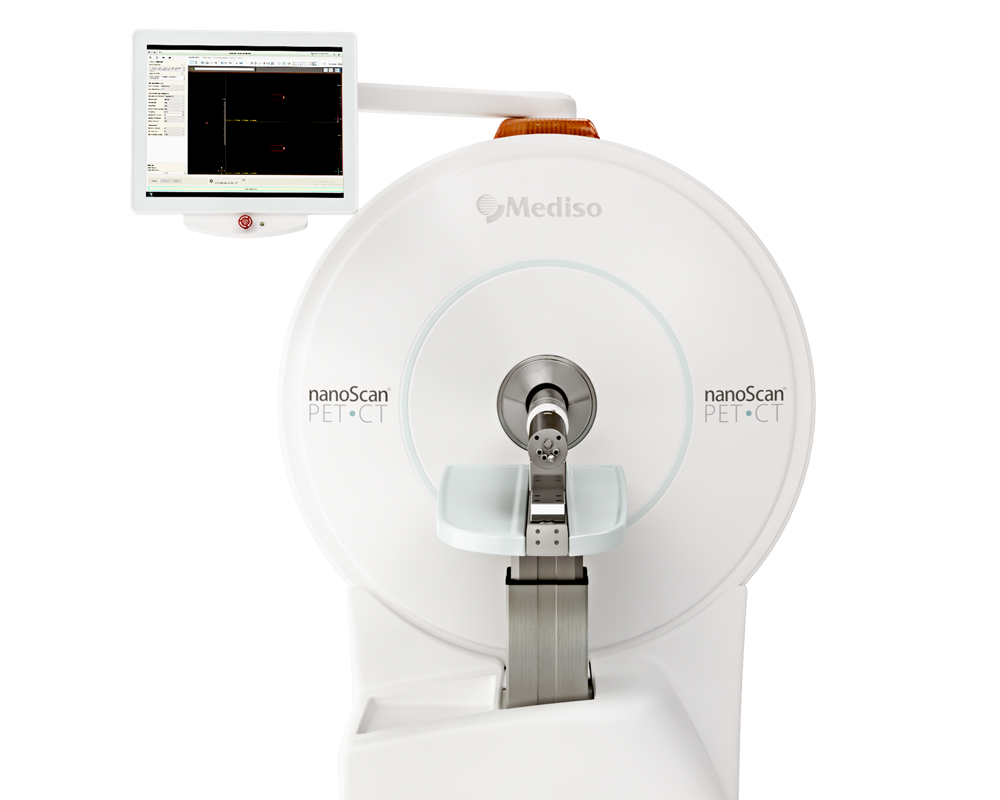
nanoScan® PET/CT
Rzeczywisty dynamiczny system PET zaprojektowany do badan ilościowych
-
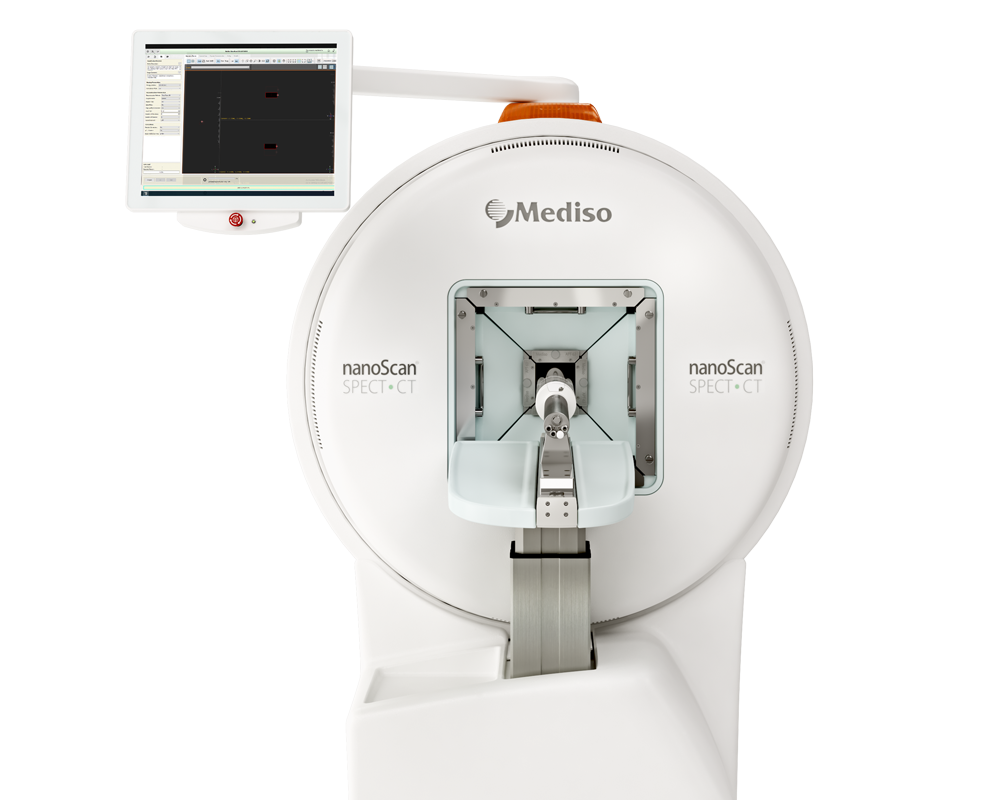
nanoScan® SPECT/CT
Wszechstronny system SPECT do obrazowania ilościowego i akwizycji dynamicznej w...
-
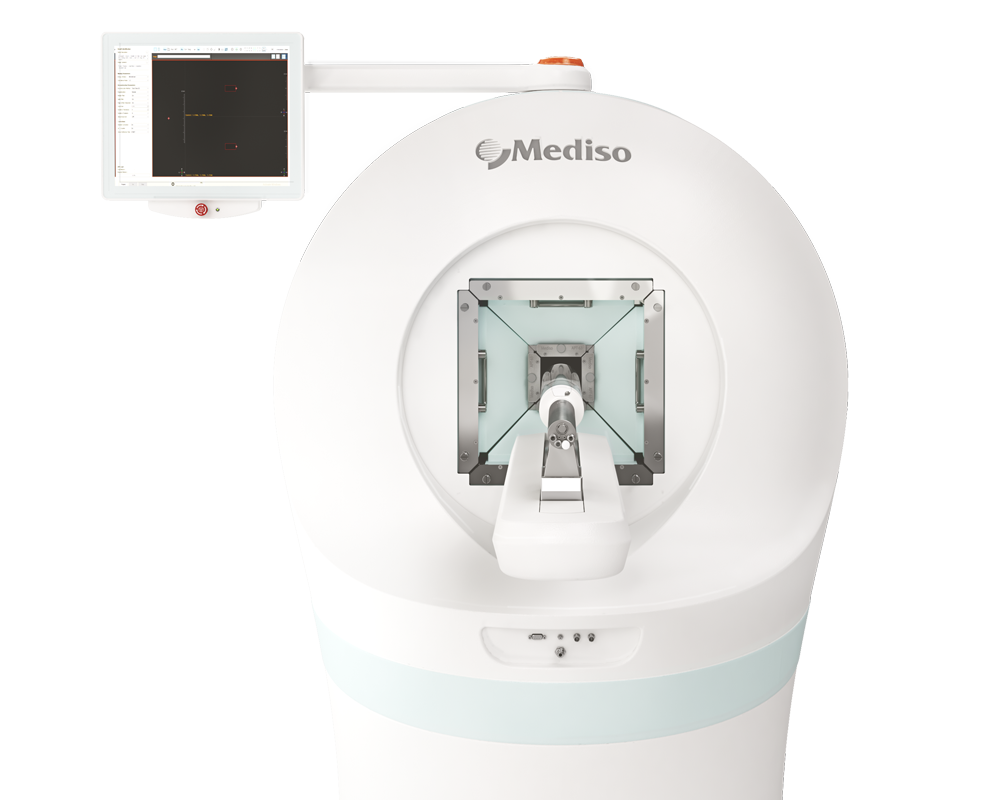
nanoScan® SPECT/CT/PET
Wszechstronny system SPECT z rzeczywistym dynamicznym systemem PET do badań iloś...
W czym możemy pomóc?
Skontaktuj się z nami aby uzyskać informacje techniczne i / lub wsparcie dotyczące naszych produktów i usług.
Napisz do nas