Central Nervous System Biodistribution and Pharmacokinetics of Radiolabeled Tofersen in Rodents, Nonhuman Primates, and Humans
2025.11.20.
Brendon E. Cook et al., Journal of Nuclear Medicine, 2025
Summary
Antisense oligonucleotides (ASOs) are an important therapeutic modality across several therapeutic areas, offering currently available and potential future treatment options for patients. ASO pharmacokinetics, biodistribution, and regional brain uptake are not fully characterized, particularly in humans. Here, we report preclinical studies and the first-in-human imaging trial measuring the biodistribution of [99mTc]Tc-MAG3-tofersen. The tracer was designed to be a proxy for tofersen (Qalsody; Biogen), an ASO approved for the treatment of amyotrophic lateral sclerosis in adults who have a variant in the SOD1 gene (SOD1-ALS).
Methods: Tofersen was conjugated to a MAG3 moiety, which chelates 99mTc to yield [99mTc]Tc-MAG3-tofersen. [99mTc]Tc-MAG3-tofersen and unlabeled tofersen were intrathecally injected in rats, nonhuman primates (NHPs), and healthy human volunteers (n = 3) via lumbar puncture, followed by SPECT/CT imaging. Tofersen was coadministered at a therapeutic dose. The tracer [99mTc]Tc-MAG3-tofersen was prepared with greater than 99% purity.
Results: Findings in rats demonstrated that [99mTc]Tc-MAG3-tofersen was a proxymeasure of unlabeled tofersen, and dosimetry was calculated from NHP imaging data. In a clinical study, unlabeled tofersen coadministered with a microdose of [99mTc]Tc-MAG3-tofersen (≤129.5 MBq [3.5 mCi]) was well-tolerated. Human dosimetry estimates were within safe radiation dose levels. Imaging showed consistent distribution of radiolabeled ASO throughout the spinal cord and brain across species, with clearance patterns diverging in humans. Although rats and NHPs demonstrated declining brain concentrations over the study duration, human brain uptake increased during the first 4 h after injection. Additionally, tracer clearance from the spine in rodents and NHPs plateaued after 6 h but continued to decrease in humans. Radiolabeled ASO clearance from the lumbar spine was observed across all species, with peripheral clearance mediated primarily through the liver and kidneys. Broad uptake of the ASO in the brain and spinal cord is consistent with the clinical effects of tofersen observed in individuals with the SOD1-ALS variation.
Conclusion: In preclinical and human SPECT/CT studies, [99mTc]Tc-MAG3-tofersen mirrored unlabeled drug distribution, showing broad spinal cord and brain uptake, with some differences in kinetics among species.
Results from nanoScan® SPECT/CT
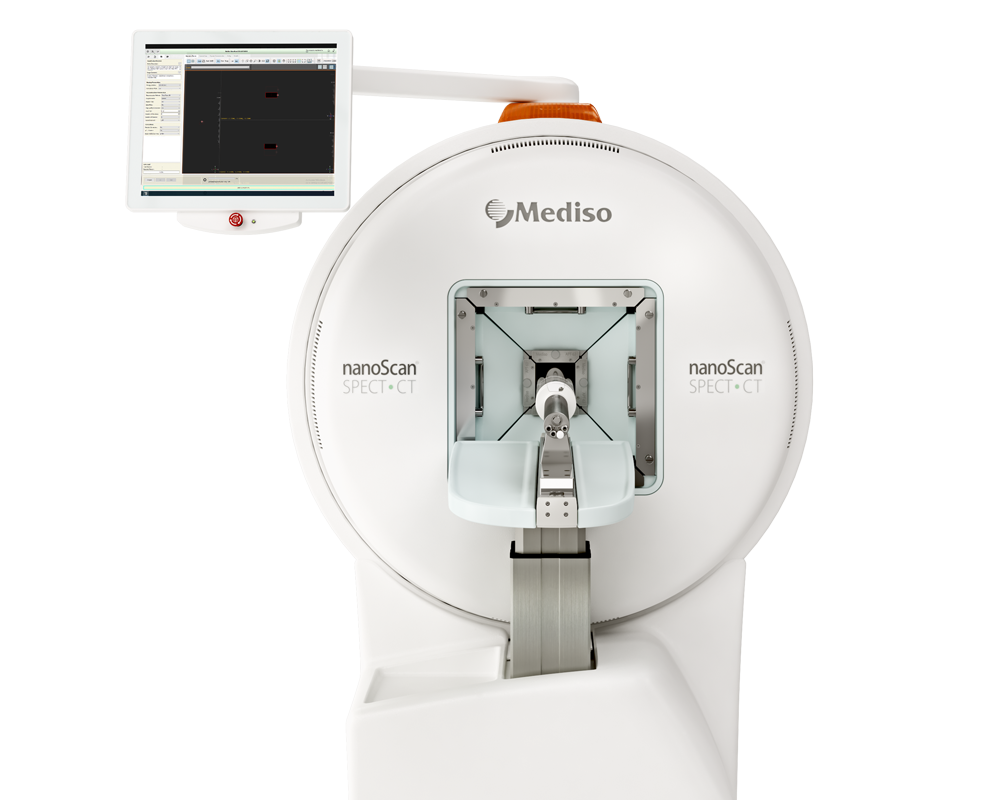
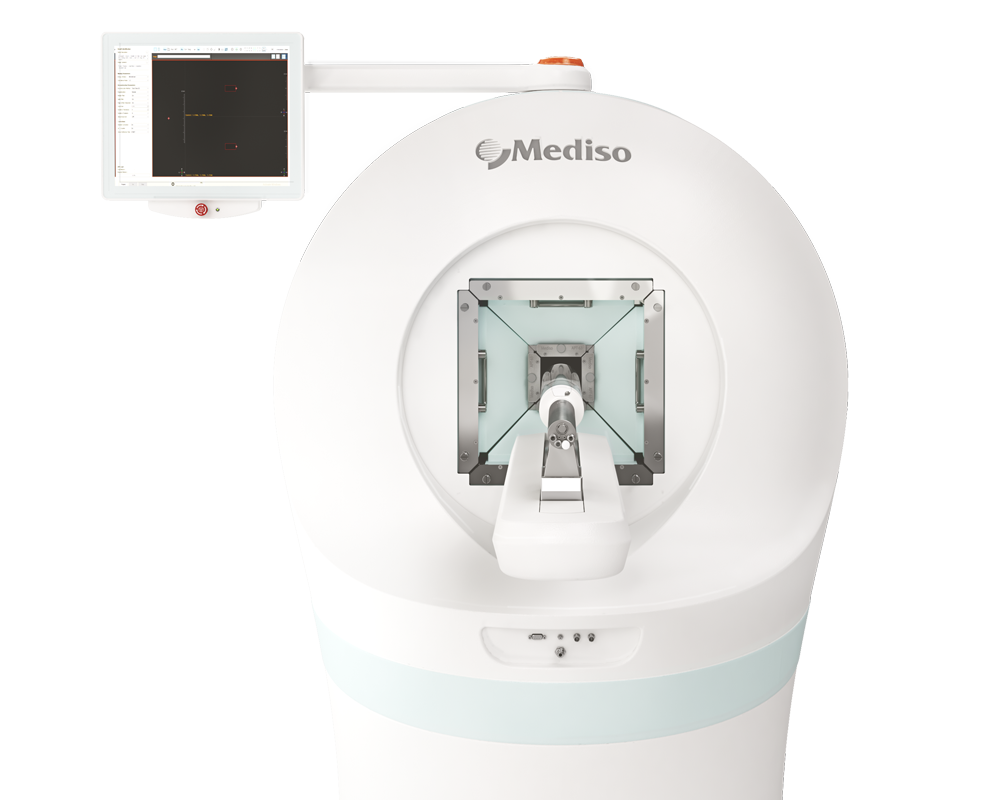
Treatment-naïve male Sprague–Dawley rats (n = 2) weighing 261 ± 3 g were anesthetized with isoflurane and surgically implanted with intrathecal catheters in the lumbar spine. The SPECT tracer [99mTc]Tc-MAG3-tofersen (19.6 ± 0.1 MBq, 3 mg) and 240 mg of unlabeled tofersen were formulated in 31 mL of aCSF and injected via intrathecal catheter, followed immediately by a 40-mL saline flush. Each animal was scanned individually using whole-body SPECT/CT (Mediso nanoScan) under isoflurane anesthesia in the prone position. Static SPECT images were acquired at 30 min and 1, 6, and 24 h after dose administration, followed immediately by a CT scan for anatomic reference.
Imaging with rats:
- SPECT images demonstrated distribution along the spine and into the cranium, with peripheral uptake and clearance primarily in the liver and kidneys (Fig. 2A).
- Time–activity curves showed an initial clearance from the brain and spine within the first 6 h, with concentrations remaining mostly constant for 24 h (Figs. 2B–2D).
- Most brain subregions demonstrated clearance over the entire 24 h; however, an initial increase in uptake in the cerebellum was observed 1–6 h after injection, followed by a decrease in concentration between 6 and 24 h.
- Across the 3 species tested, imaging distribution results with [99mTc]Tc-MAG3-tofersen generally followed the same trend: after intrathecal injection, the tracer is well-distributed along the spine and into the brain, with heterogeneous distribution within different brain regions. This is followed by asymptotic clearance from the CNS, leading to uptake in the liver and kidneys.

Fig 2. SPECT imaging of [99mTc]Tc-MAG3-tofersen in rats. (A) Maximum-intensity-projection images of whole body (top) and sagittal views of head and cervical spine (bottom) showing distribution of [99mTc]Tc-MAG3-tofersen in rats (n = 2) 1, 6, and 24 h after intrathecal injection. Time–activity curves derived from SPECT data measuring activity in ROIs in CNS (lumbar, thoracic, and cervical spine ROIs include both cord and proximal CSF) (B), kidneys and liver (C), and brain atlas (D).
Conclusion
In this publication the feasibility and utility of [99mTc]Tc-MAG3-tofersen radiolabeling was demonstrated in in vivo biodistribution assessment. The broad uptake of the ASO in the brain and spinal cord in the healthy volunteer study is consistent with the clinical effects of tofersen observed in individuals with SOD1-ALS. The data also confirmed that rodent and NHP models are suitable methods for preclinical testing of ASO-based tracers, enabling their deployment into human trials, although some differences in initial uptake and clearance from the CNS must be carefully considered. Collectively, these findings suggest that drug radiolabeling has potential as a technologic tool that can be used across a wide range of therapeutics to improve and refine our understanding of drug pharmacokinetics, biodistribution, and regional brain exposure.
Full article on jnm.snmjournals.org
How can we help you?
Don't hesitate to contact us for technical information or to find out more about our products and services.
Get in touch