Longitudinal comparison of adaptive neuroplasticity in two rat models of unilateral vestibulopathy by dual-tracer [18F]FDG and [18F]UCB-H PET
2026.02.19.
Isabelle S. Fuxjäger et al., NeuroImage, 2026
Summary
Animal models of acute unilateral vestibulopathy are well established for the study of adaptive lesion-induced neuroplasticity, because symptoms of acute vestibular asymmetry such as nystagmus and postural imbalance recover over time as central vestibular compensation mechanisms commence action. The purpose of this study was to compare these mechanisms in a postganglionic complete unilateral vestibular neurectomy model (UVN) vs. a preganglionic incomplete chemical unilateral labyrinthectomy model (cUL) using a longitudinal [18F]FDG/[18F]UCB-H dual tracer positron emission tomography (PET) approach accompanied by multimodal behavioral testing. Twenty-four male Sprague Dawley rats underwent either cUL or UVN. Postoperatively, [18F]FDG PETs were conducted weekly for four weeks to depict changes of [18F]FDG as a surrogate for functional plasticity, and [18F]UCB-H PETs were carried out at three time points over nine weeks to visualize alterations in synaptic density indicating structural plasticity. Behavioral recovery was assessed weekly using a clinical scoring system and open field evaluation. Behavioral data reflected comparable compensation dynamics between groups. Both [18F]FDG and [18F]UCB-H PET revealed a similar spatial pattern of brain regions involved in adaptive neuroplasticity. However, while the relative extent of [18F]FDG uptake in these networks was comparable across both models, synaptic density changes were more pronounced in UVN vs. cUL. Specifically, synaptic density in the vestibular nuclei was significantly lower after UVN, accompanied by a more intense compensatory increase in sensorimotor cortical areas. In conclusion, synaptic density imaging may be a more sensitive method to depict subtle differences in mechanisms of lesion-induced adaptive neuroplasticity than traditional techniques such as imaging of glucose metabolism.
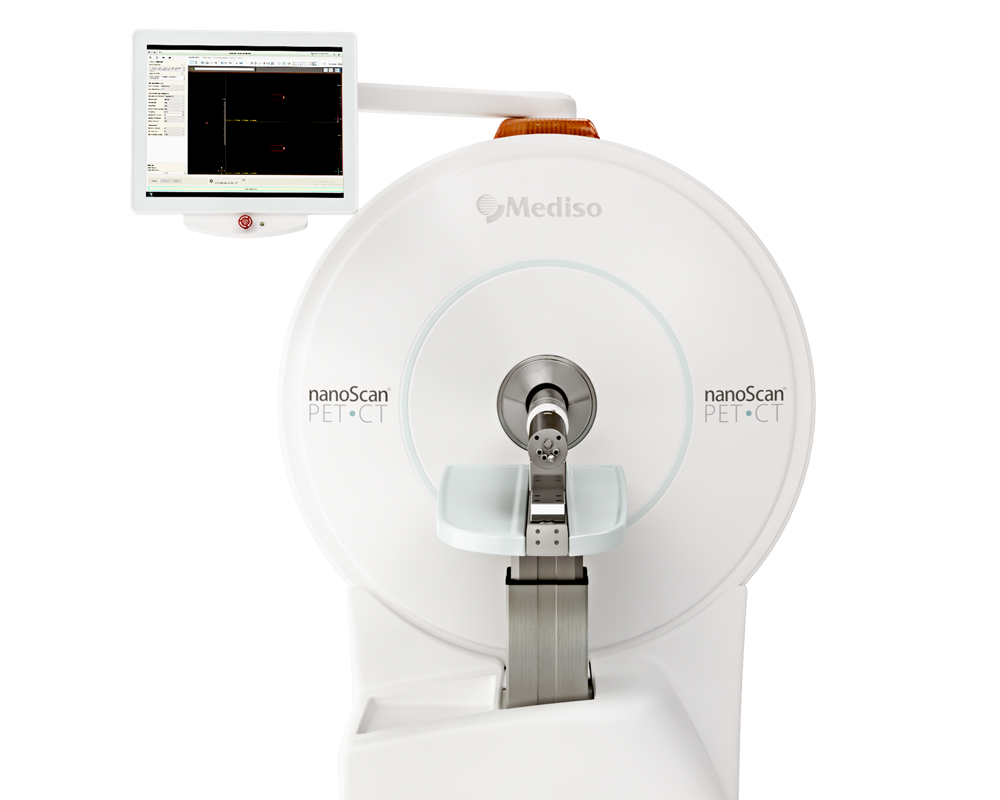
Results from nanoScan® PET/CT
Both UVN and cUL animals showed a marked reduction of [18F]FDG uptake in the ipsilesional VN compared to baseline (Fig. 2A). In the UVN group, this decrease was visually more pronounced on day 1 and extended to the contralesional VN over the course of four weeks compared to the cUL group. However, when directly comparing UVN with cUL (Fig. 2B), no significant differences could be detected.

In contrast to these subtle changes in [18F]FDG uptake, synaptic loss in the vestibular nuclei was more pronounced in the UVN group, when compared to baseline (Fig. 3A). After neurectomy, the animals had a significant decline in synaptic density at week 1, which further decreased until week 9. Additionally, the synaptic loss extended to the cerebellum. In contrast, the cUL showed more subtle changes that were only visible at week 9. These differences were also apparent when directly comparing UVN with cUL (Fig. 3B): UVN had less uptake of [18F]UCB-H in the vestibular nuclei (peak at week 1) and cerebellum (peak at week 9).

In [18F]FDG PET, the thalamus, basal ganglia, somatosensory cortex, and motor cortex were more upregulated in the UVN animals than in the cUL mostly on day 1 (Fig. 4A). These disparities rapidly declined, except for the thalamus and somatosensory cortex, where an increased glucose metabolism in the UVN was still present at week 2.

How can we help you?
Don't hesitate to contact us for technical information or to find out more about our products and services.
Get in touch