Regioselective Glycosylation of Fluorine-18-Labeled Sorbitol for Enhanced Bacterial Detection In Vivo Using PET
2025.12.01.
Sang Hee Lee et al., JACS Au, 2025
Abstract
Precise and rapid detection of bacterial infection in vivo remains a significant challenge in clinical practice. In response to this challenge, several pathogen-specific positron emission tomography (PET) tracers have been developed, including the fluorine-18-labeled sorbitol derivative [18F]FDS, which shows great promise in detecting bacterial infections in patients. In this study, the authors tested the hypothesis that the diagnostic performance of [18F]FDS could be modulated via regioselective glycosylation to improve radiotracer stability, broaden organism sensitivity, and tune pharmacodynamics. A synthetic sequence was developed, whereby the common radiotracer [18F]FDG was converted chemoenzymatically to α- and β-linked disaccharides via reverse phosphorolysis and subsequently reduced to the corresponding glycosylated [18F]FDS derivatives. This strategy allowed the syntheses of glucopyranosyl-d-sorbitol analogs [18F]FNT (α-1,3 linked), [18F]FMT (α-1,4 linked), [18F]FLT (β-1,3 linked), and [18F]FCT (β-1,4 linked). Among these tracers, the α-linked analogs [18F]FNT and [18F]FMT showed greater uptake in both Gram-positive and Gram-negative pathogens compared to the β-linked analogs [18F]FLT and [18F]FCT. In vivo time–course PET imaging of [18F]FNT and [18F]FMT in uninfected mice revealed favorable pharmacokinetics, including rapid urinary excretion, minimal hepatobiliary retention, and low off-target signals. PET imaging using [18F]FNT and [18F]FMT detected Klebsiella pneumoniae pulmonary infections in mice with high infected/uninfected tissue ratios (∼6-fold). [18F]FNT also showed high infected/uninfected tissue ratios (∼28-fold) in Staphylococcus aureus myositis, whereas the parent [18F]FDS tracer was not taken up by the Gram-positive organisms tested. These findings highlight the potential for PET tracer glycosylation as a tool to modulate target specificity and improve imaging sensitivity. These results also establish [18F]FNT as a highly promising PET tracer with a high translational potential for detecting bacterial infection in vivo.
Results from nanoScan® PET/CT
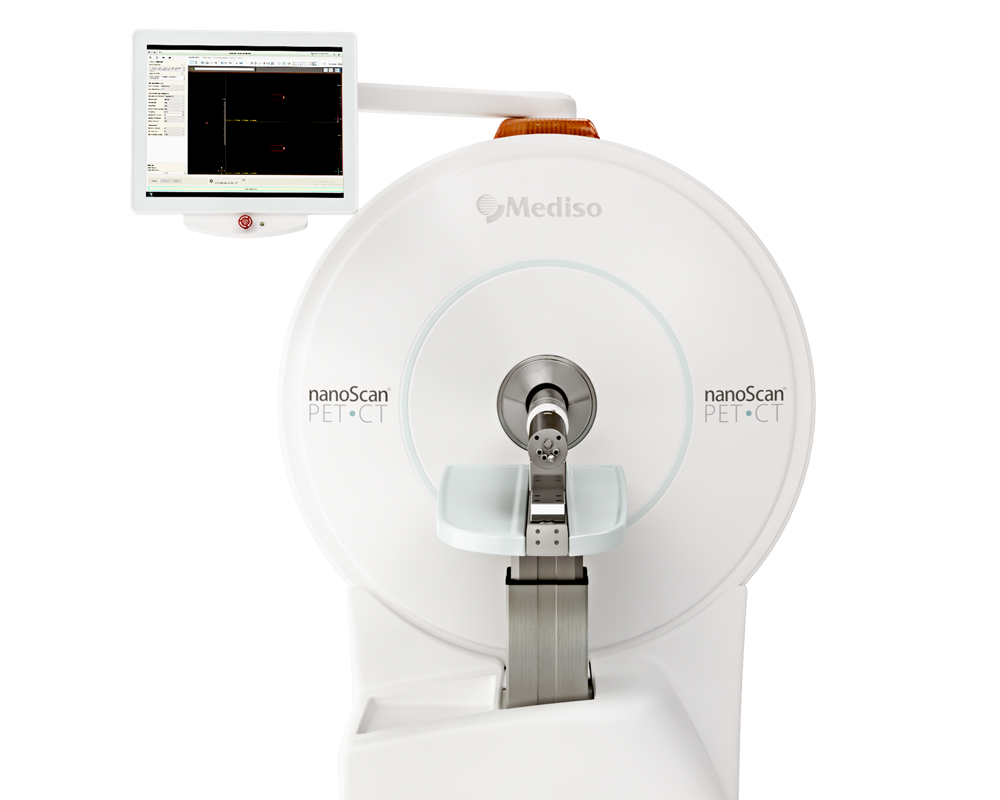
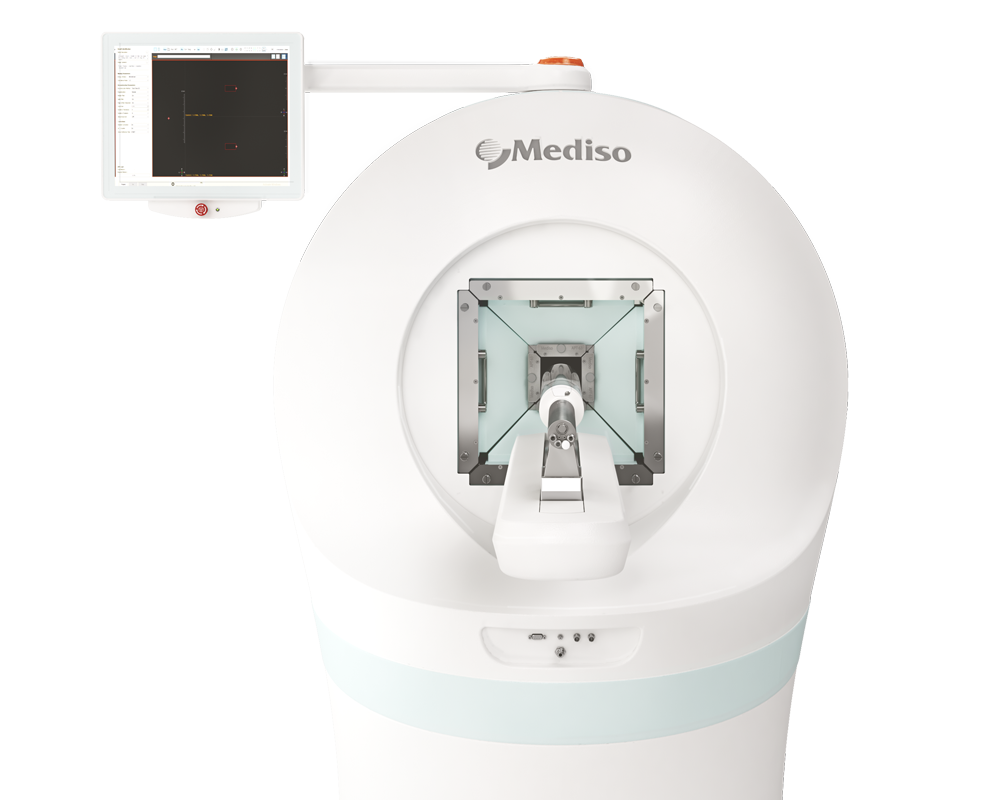
Imaging was conducted using a nanoScan® PET/CT instrument (PET 123S/CT 1512, Mediso Medical Imaging). Mice were anesthetized with 2% isoflurane/oxygen for intravenous administration of 18F tracers (∼5 MBq in 150 μL) via tail vein and maintained during data acquisition. PET data of uninfected mice were acquired in the list mode for 90 min, starting immediately after 18F-tracer administration, followed by a CT scan. The PET data were reconstructed into three-dimensional volumes and co-registered with CT images using manufacturer-provided software in 53 dynamic frames (15×2 s, 6 ×5 s, 6×10 s, 4×30 s, 6×30 s and 16×300 s). PET data of infected mice were acquired for 20 min, starting at 70 min post injection of 18F-tracer (mid time 80 min), followed by a CT scan. The list mode PET data were reconstructed into three dimensional volumes in a single static frame. All PET scans were corrected for 18F decay, dead time, and random coincidences and reconstructed in to a 160×160×184 matrix with voxel size 0.8 mm using a three-dimensional ordered subject expectation maximization (OSEM) algorithm (40 iterations, 1 subset). Both attenuation and scatter corrections were applied to PET reconstructions using the co-registered CT.
- Whole-Body PET/CT in uninfected mice: dynamic imaging showed rapid systemic distribution followed by predominant renal clearance. Lower hepatobiliary retention and faster elimination half-life were observed for glycosylated tracers. Time–course imaging demonstrated comparable blood pool distribution half-lives as well as shorter elimination half-lives for [¹⁸F]FNT and [¹⁸F]FMT versus [¹⁸F]FDS (see Fig. 2A).

Figure 2A. Comparison of whole-body distribution/elimination profiles of [18F]FNT, [18F]FMT, and [18F]FDS in uninfected mice. Representative time−course μPET/CT images of 18F tracers in uninfected mice (n = 4 for each).
- Klebsiella pneumoniae lung Infection: static imaging in murine pneumonia model demonstrated that [¹⁸F]FNT and [¹⁸F]FMT produced clear focal uptake in infected lungs with low background, while [¹⁸F]FDS showed higher nonspecific background signal. No signal observed in lungs inoculated with heat-killed bacteria, confirming infection specificity (Fig. 3B.).

Figure 3B. μPET/CT imaging of 18F-tracers in a K. pneumoniae pulmonary infection model. Representative μPET/CT images of [18F]FDS, [18F]FMT, and [18F]FNT in uninfected (left panel) and K. pneumoniae-infected (right panel) mice (n = 4 for each). The white dashed circles indicate the heart.
- Staphylococcus aureus (MRSA) Myositis infection: static imaging showed that [¹⁸F]FNT has strong focal uptake at live MRSA–infected muscle sites and no detectable signal at heat-killed control sites. In case of [¹⁸F]FMT the infection-specific signal was significantly lower (Fig. 4C.). These results demonstrate high sensitivity of [¹⁸F]FNT for Gram-positive infection, which is not detectable with [¹⁸F]FDS.

Figure 4C. μPET/CT imaging of [18F]FNT and [18F]FMT in a murine myositis model of clinically isolated MRSA infection. Representative [18F]FNT and [18F]FMT μPET/CT images of a murine myositis model inoculated with live MRSA in the left deltoid (live, red arrow) and thermally inactivated MRSA in the right deltoid (heat-killed, light blue arrow), respectively.
- Dynamic PET scans of MRSA Myositis with [¹⁸F]FNT showed early uptake at both live and heat-killed sites but sustained retention only in live MRSA lesions (Fig. 5A.). Rapid washout could be observed from heat-killed control tissue.

Figure 5A. Dynamic μPET/CT scans of [18F]FNT in a murine myositis model of infection using MRSA clinical isolates. Representative [18F]FNT μPET/CT images (summed image between 85 and 90 min p.i.) of a murine myositis model inoculated with live MRSA in the left deltoid (infected, red arrow) and thermally inactivated MRSA in the right deltoid (heat-killed, white arrow).
- To further evaluate the detection sensitivity for [18F]FNT, mice were inoculated in the left deltoid with different colony forming units (CFUs) of MRSA and imaged. Regions of interest (ROI) quantification analysis indicated a CFU-dependent increase of [18F]FNT uptake showing that the PET signal correlates with MRSA bacterial burden which correlated with the actual bacterial burden determined in ex vivo CFU counts (Fig. 6A.).

Figure 6A. Detection sensitivity analysis of [18F]FNT in a myositis model of MRSA infection. Representative [18F]FNT μPET/CT images with variable CFUs of inoculated MRSA (red arrow) mice.
Conclusion
The impact of regioselective and stereoselective modification of the infection-targeted PET radiotracer [18F]FDS to α/β 18F-glucopyranosyl-d-sorbitol analogs were demonstrated. Data showed that the glycosidic linkage and configuration of 18F-sugar alcohols can markedly influence bacterial specificity, improve tissue clearance, and reduce off-target retention compared to the parent sugar alcohol [18F]FDS. The findings summarized in this article also highlight the use of glycosylation to improve PET tracer performance, a strategy more frequently employed in pharmacotherapy. Although β-linked analogs exhibited negligible bacterial uptake, [18F]FCT and [18F]FLT may also hold promise for imaging fungal infections, particularly those involving β-glucan-associated metabolic pathways. These new imaging tools and their rapid radiosynthesis from [18F]FDG will transform the way PET radiotracers are considered and used in the acute care setting.
Full article on ACSPublications.
Wie können wir Ihnen behilflich sein?
Bitte kontaktieren Sie uns für technische Informationen und Unterstützung jeglicher Art in Zusammenhang mit unseren Entwicklungen und Produkten.
Kontaktformular