Low-Dose Radiotherapy Attenuates Pulmonary Granulomas Involving Ataxia-Telangiectasia Mutated-Dependent Modulation of the Interferon-β Response : A Host-Directed Therapeutic Strategy for Tuberculosis
2026.07.10.
Ha-Yeon Song et al., The American Journal of Pathology, 2026
Summary
Pulmonary granulomas serve as a major obstacle in tuberculosis treatment. Low-dose radiotherapy (LDRT) emerged as a promising intervention for broad-spectrum inflammatory conditions after the COVID-19 pandemic. The therapeutic potential in mitigating pulmonary granuloma formation and progression was investigated by using a murine model induced by Mycobacterium tuberculosis—derived trehalose-6,6-dimycolate. LDRT (0.5 Gy) significantly reduced fluorine-18-fluorodeoxyglucose uptake, lung index, and granuloma burden, while alleviating hypoxia and down-regulating hypoxia-inducible factor-1α and cell death markers (LC3B, p62, BNIP3, and caspase-3). This improvement correlated with reduced infiltration of leukocytes, macrophages, and monocytes. Mechanistically, LDRT suppressed interferon-β while enhancing IL-10 and transforming growth factor-β. This response was mediated by a transient DNA damage response driven by the ataxia-telangiectasia mutated (ATM) protein. Pharmacologic inhibition of ATM or its downstream effectors abrogated the LDRT-induced cytokine modulation. Notably, ATM activation with GJ071 oxalate reproduced the anti-inflammatory profile in vitro and effectively alleviated granuloma pathology in vivo, mimicking the therapeutic efficacy of LDRT.
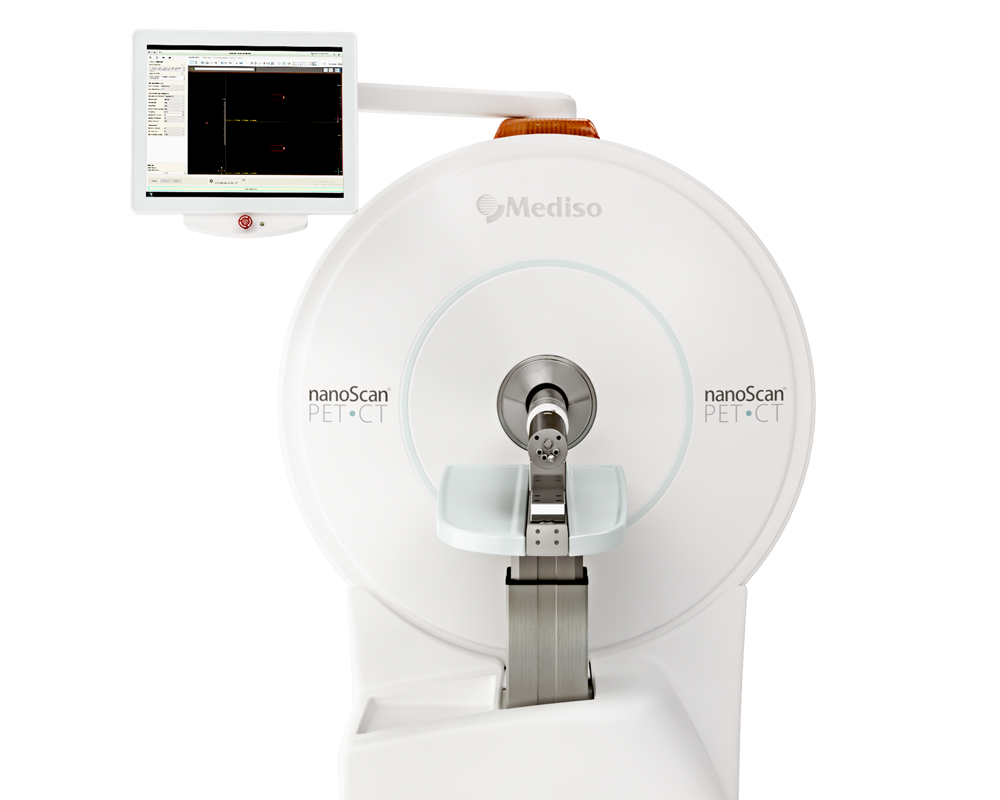
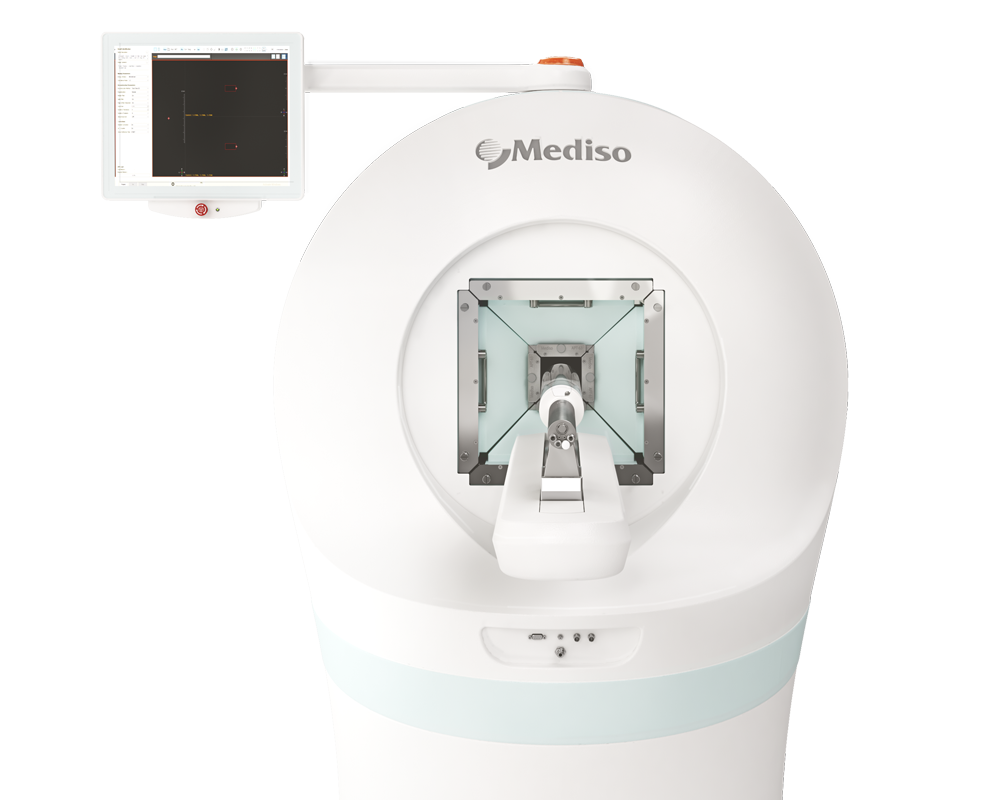
Positron emission tomography (PET/CT) was performed 6 days post mycolic acid trehalose-6,6′-dimycolate (TDM) injection (pulmonary granulomas inducing), and 4 days after thoracic irradiation (0,5 Gy). Fluorine-18-fluorodeoxyglucose was administered intravenously. After a 60-minute uptake period, PET/CT imaging was performed by using a nanoScan® PET/CT system (Mediso, Budapest, Hungary) equipped with a multi-bed system. Imaging conditions included static PET acquisition (20 minutes; energy window, 400 to 600 keV; coincidence time window, 5 nanoseconds) and CT acquisition (170 millisecond exposure time, 180◦ rotation, 50 kVp, 580 μA; field-of-view, 78.5 × 100 mm). Tera-Tomo three-dimensional reconstruction (4 iterations, 6 subsets; coincidence mode, 1 to 5) with an isotropic voxel size of 0.4 mm3, was optimized for bed performance.
The effect of LDRT on pulmonary granulomas induced by TDM from the H37Rv strain of Mtb was evaluated. Mice were administered 0.5 Gy LDRT to the thoracic region 2 days post-TDM injection (Figure 1A). Body weight in the TDM-only group decreased significantly by day 1 and remained low until day 4, whereas the TDM + LDRT group showed significant recovery by day 3 (Figure 1B). PET/CT imaging showed an approximately fourfold increase in fluorine-18-fluorodeoxyglucose uptake in TDM-only mice compared with the vehicle group, whereas the TDM + LDRT group exhibited significant reductions in standardized uptake value mean (Figure 1C). Gross lung pathology revealed increased lung index and nodule formation in the TDM- only group, which were partially attenuated in the TDM + LDRT group (Figure 1D). Histologic analysis confirmed that TDM-induced granulomas occupied 44.69% of the lung tissue, compared with 27.84% in the vehicle group, whereas the TDM + LDRT group showed a reduced granuloma burden (31.8%).


Figure 1: Low-dose radiotherapy (LDRT) reduces pulmonary granulomas in a trehalose-6,6′-dimycolate (TDM)-injected mouse model. A: Experimental design overview. B: Daily body weight changes. C: Representative positron emission tomography/computed tomography images on day 6. D: Lung index analysis on day 7 with representative tissue images. Black arrows indicate granuloma regions. Bar graph shows the quantified inflammatory area.
Conclusion
Collectively, these findings show that LDRT mitigates granuloma pathology by modulating hypoxic and inflammatory microenvironments through ATM-dependent signalling characterized by the down-regulation of interferon-β, establishing a mechanistic rationale for targeting the ATM pathway as a novel host-directed therapeutic strategy for tuberculosis.
Full article on sciencedirect.com
W czym możemy pomóc?
Skontaktuj się z nami aby uzyskać informacje techniczne i / lub wsparcie dotyczące naszych produktów i usług.
Napisz do nas